
Healing Together: Why We Care for Mom and Baby as One
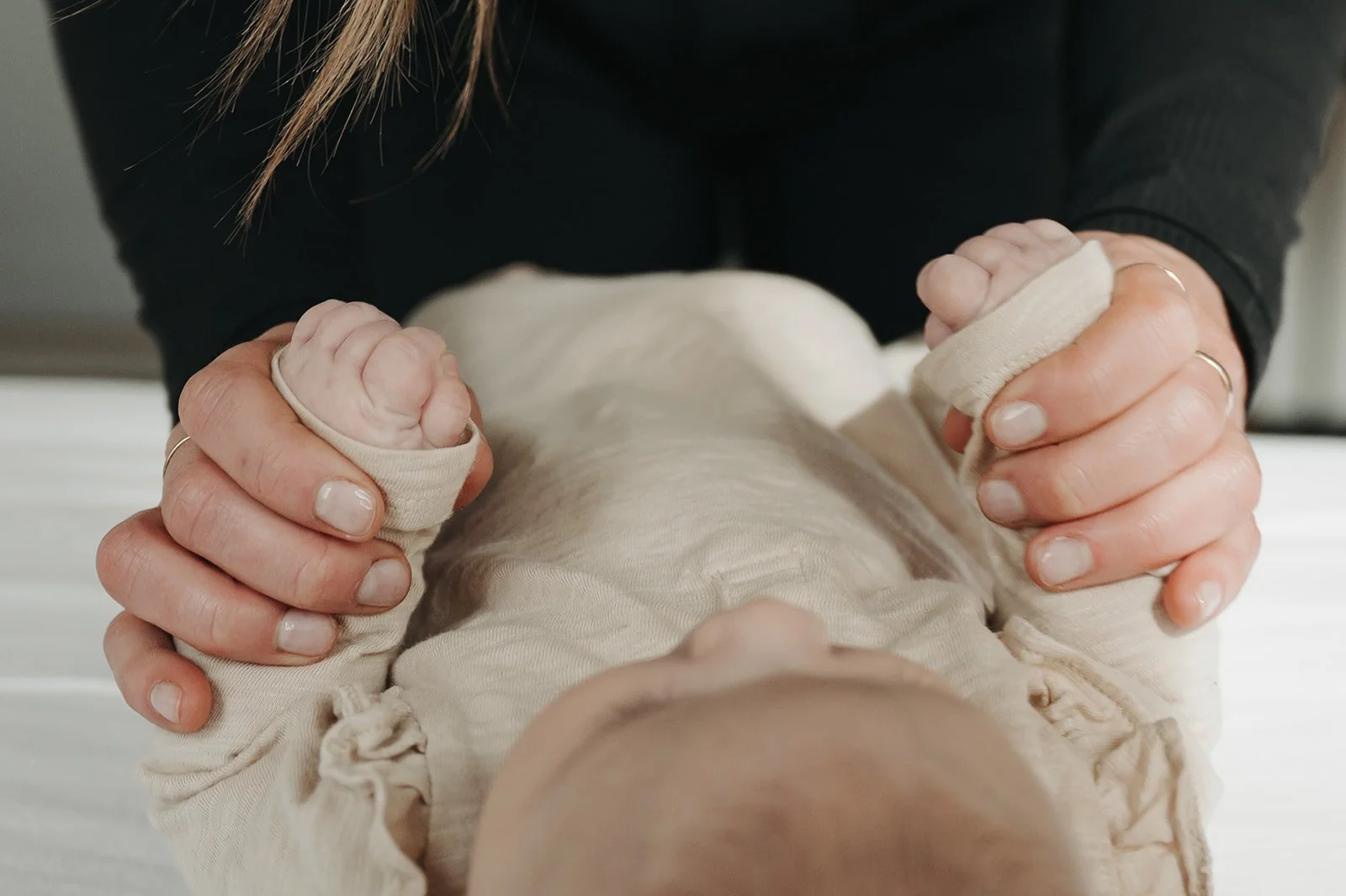
There is a connection unlike any other.
For nine months, mother and baby grow together. Every heartbeat, every movement, every change is shared. Long before your baby takes their first breath, your nervous systems are already communicating. Your baby learns the rhythm of your voice, the cadence of your heartbeat, and the safety of your presence.
Birth doesn't end that relationship.
It transforms it.
The physical connection may change, but the biological and emotional connection continues to deepen. A mother's wellbeing influences her baby's wellbeing, and a baby's experiences can influence the mother's body, emotions, and nervous system in return. They are constantly communicating with one another.
This is why, at Holm Collective, we believe caring for mothers and babies together isn't simply convenient—it's meaningful.
Looking Beyond the Individual
Traditional healthcare often separates care into different appointments, different practitioners, and different conversations.
Mom is treated.
Baby is treated.
But the relationship between them is often left out of the picture.
We wanted to create something different.
Our collaborative Mom & Baby sessions recognize that feeding challenges, unsettled sleep, body tension, postpartum recovery, birth experiences, and nervous system regulation rarely exist in isolation. They're often interconnected, and understanding both sides of the story helps us provide more complete, compassionate care.
Rather than asking, "What's wrong?" we ask, "What might this relationship be telling us?"
Why Collaborative Care Matters
When practitioners work together, something powerful happens.
An osteopath may notice patterns of tension affecting baby's comfort while a community nurse explores feeding, growth, maternal recovery, and the practical realities of life at home.
Together, we begin to see a fuller picture.
Instead of isolated pieces, we see the whole family.
Research increasingly supports collaborative, family-centred care during the postpartum period. When healthcare providers work together and parents feel informed, supported, and included in decision-making, families often report greater confidence, improved breastfeeding experiences, stronger therapeutic relationships, and better overall wellbeing. While every family's journey is unique, coordinated care can reduce the feeling of having to navigate those early weeks alone.
Supporting the Dyad
One of the most beautiful concepts in postpartum care is the idea of the mother-infant dyad.
Rather than viewing mother and baby as two separate patients, we recognize them as a connected unit.
When a mother feels more supported, regulated, and confident, that often creates more capacity for connection with her baby.
When a baby's body becomes more comfortable and feeding becomes easier, parents often experience less stress and greater confidence.
Each supports the other.
Not because one "fixes" the other—but because they are deeply connected.
What We Hope Families Experience
Every family who walks through our doors has their own story.
Some are navigating feeding challenges.
Some are processing a difficult birth.
Some simply want reassurance that they're doing okay.
Our hope is that families leave feeling:
Seen.
Heard.
Supported.
More connected to themselves and to each other.
Sometimes that means improved feeding.
Sometimes it means less body tension.
Sometimes it means feeling more confident in reading your baby's cues.
Sometimes it simply means someone took the time to listen.
Those moments matter.
Why We Created These Sessions
We created our collaborative Mom & Baby appointments because we believe healthcare is at its best when it is connected.
Connected between practitioners.
Connected between mother and baby.
Connected to the understanding that healing rarely happens in isolation.
Our goal isn't just to treat symptoms.
It's to support relationships.
Because when we nurture the connection between a mother and her baby, we're not only caring for today—we're helping build a foundation for the years ahead.
