
Does Red light Therapy actually work?
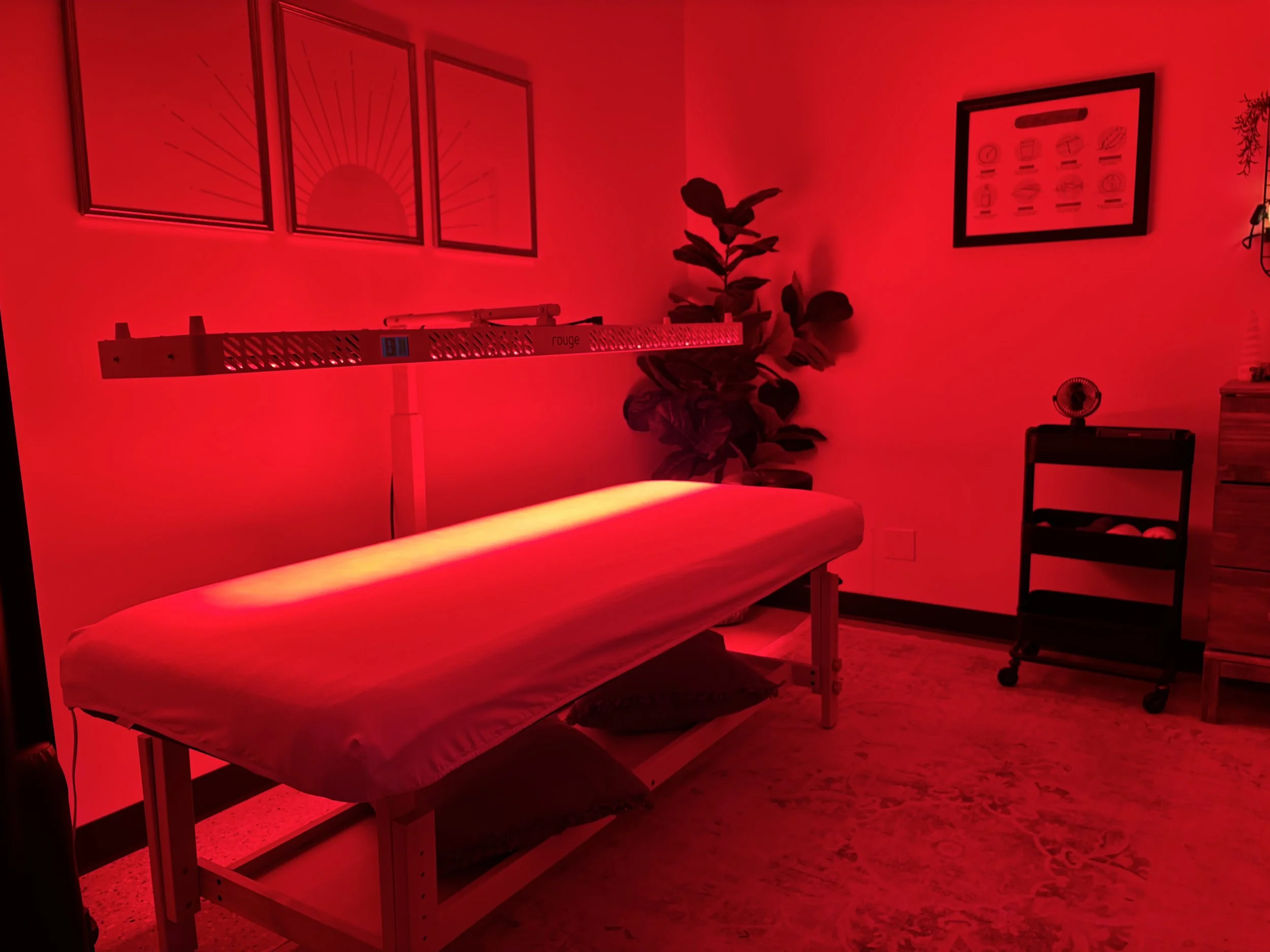
You’ve probably seen it everywhere lately… but does red light therapy actually work?
Short answer: yes—but not in the way quick-fix wellness trends promise.
Red and near-infrared light works at the level of your cells. These wavelengths penetrate the skin, muscle, and bone tissue and are absorbed by your mitochondria (your cells’ energy producers), helping increase ATP (cellular energy), reduce oxidative stress, and support tissue repair.
If you can imagine your mitochondria as a generator, the ATP would be the fuel source and adding Red and Near Infrared light would be like adding the best of the best premium fuel with an engine cleaning additive that eliminates any wear and tear.
Could you imagine!
But here’s what actually happens in the body when these wavelengths are absorbed; research in photobiomodulation (PBM) shows they can:
• Increase cellular energy production
• Reduce oxidative stress
• Support tissue repair and regeneration
• Improve circulation
• Faster healing
• Reduced inflammation
• More resilient skin and tissues
• Support for energy and recovery
It’s not magic. It’s biology.
This is why red light therapy has been studied across areas like skin health, muscle recovery, inflammation, and even cognitive function.
And like most things we believe in at Holm Collective—it works best when it’s part of a bigger picture. Consistency. Nervous system support. Nourishment. Rest.
It’s not a quick fix.
It’s a supportive input—one that works best when layered with the foundations we always come back to: nourishment, rest, nervous system safety, and consistency.
Our Rouge panel allows us to offer clinically relevant wavelengths in a calm, guided space—so you’re not just trying something trendy, you’re experiencing something intentional.
Because healing isn’t about doing more. It’s about supporting your body in the right ways.
If you’ve been curious, this is your invitation to explore it with guidance, not guesswork.
